
Education and Support for Orphaned Students Worldwide
Education and Support for Orphaned Students Worldwide
Faire un don afin de soutenir les étudiants
Je fais un donWe use cookies on our website to personalize and improve your experience and improve.
By continuing, you agree to the terms of our Privacy Policy.
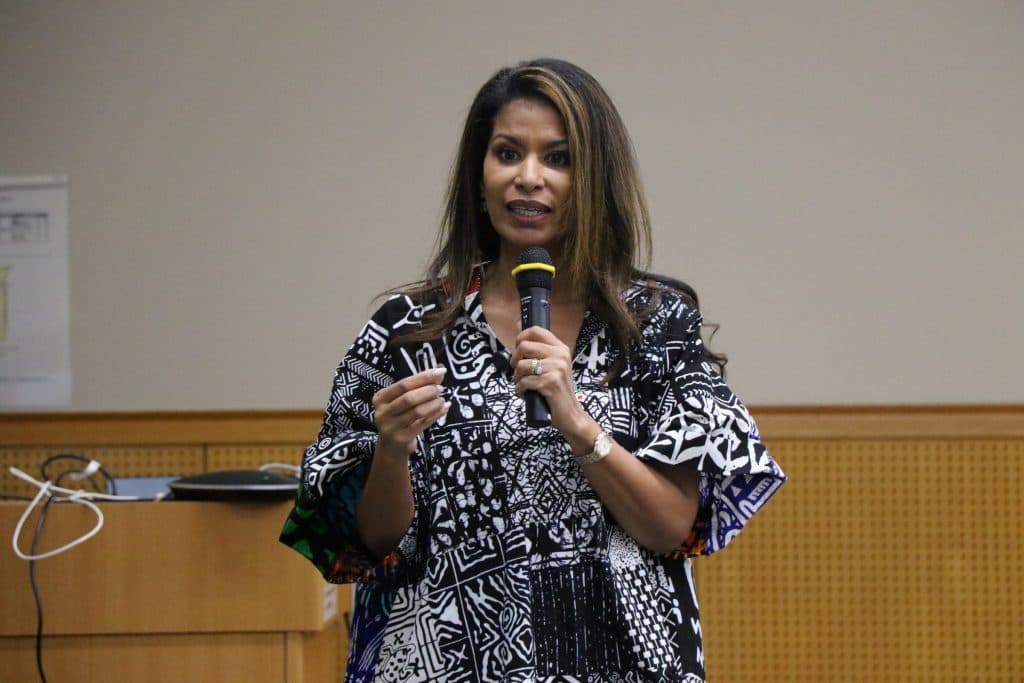
At Tsudoi 2026, Scholars from the Ashinaga Africa Initiative (AAI) and Japanese Ashinaga Scholars gathered at the National Olympic Center in Tokyo for a pivotal segment of their leadership journey. This annual convening deepens their leadership and professional development while creating intentional space to reflect on their kokorozashi, a Japanese concept that embodies a lifelong commitment to serving others and creating positive change.
This year’s theme, “Ubuntu in Action: Building Legacies for Change,” was chosen in honor of Tama-chan, the founder of the Ashinaga Foundation, and his life and legacy. Following his passing, the AAI Scholars felt called to center the convening on togetherness, shared humanity, and collective responsibility, values that defined how he lived and led. Ubuntu, grounded in the belief that “I am because we are,” offered a meaningful framework for Scholars to reflect on connections across continents and cultures and on the legacies they hope to build.
The keynote address was delivered by Dr. Julie Gichuru, media leader, strategist, and CEO of the Africa Leadership and Dialogue Institute (ALADI). Her message centered on identity, responsibility, and action. She reminded Scholars that legacy is shaped by personal choices, including the partners they choose, whose influence can profoundly shape their lives.
After studying in the United Kingdom, she returned to Kenya and spent months searching for work before securing her first role in business and legal reporting at one of Kenya’s leading broadcasting companies. It was in that position that she came to a defining realization: narratives shape nations. The stories that societies elevate influence public perception, inform policy decisions, and determine what people believe is possible. She urged Scholars to take ownership of their own narratives and to be intentional about how they tell the stories of their communities and of Africa.
During the 2010 drought in the Horn of Africa, she demonstrated this conviction in action. Through strategic media leadership, her reporting helped mobilize national solidarity and raise 10 million dollars in Kenya in just one month. It was a powerful reminder that leadership is not a title, but the courage to shape narratives and act decisively in moments that matter.
From her journey, she also encouraged Scholars to take up space and lead with presence, to participate boldly, position themselves intentionally, and refuse to shrink in rooms where decisions are made.
Her words resonated deeply. As Khan, an AAI Scholar from South Sudan, shared: “I really enjoyed Dr. Julie’s speech, especially the part where she encouraged us to take up space and stand out. It resonated with me deeply because I want to challenge myself to put myself out there more if I am to create the change I aspire to.”
On education, she posed a defining question: education to what end? “Education for dignity, livelihoods, and prosperity.” She urged Scholars to “use education as your armor” and let it strengthen and equip them to navigate complex systems and create change. At the heart of her message was Ubuntu. “Ubuntu is a living and breathing concept. It is who we are.” In challenging times, she urged, “We have to wear Ubuntu like an armor and fight for it.” Her experience during the drought demonstrated that solidarity could transcend borders and that collective action can overcome division.
Legacy, she reminded Scholars, demands both courage and strategy. In the spirit of Ubuntu in Action, her message was clear: building legacies for change requires bold presence, intentional choices, continuous learning, and collective responsibility. “I am because we are” is not simply a philosophy. It is a call to act.
Recommended Tags
Related Articles
Avis de suspension temporaire du site web en raison d’une maintenance du système
Recommended Articles