Education and Support for Orphaned Students Worldwide
Education and Support for Orphaned Students Worldwide
Donate to
Support Students
Newsletter
Join our email newsletter
Stay up to date with all activities and opportunities.
We use cookies on our website to personalize and improve your experience and improve.
By continuing, you agree to the terms of our Privacy Policy.
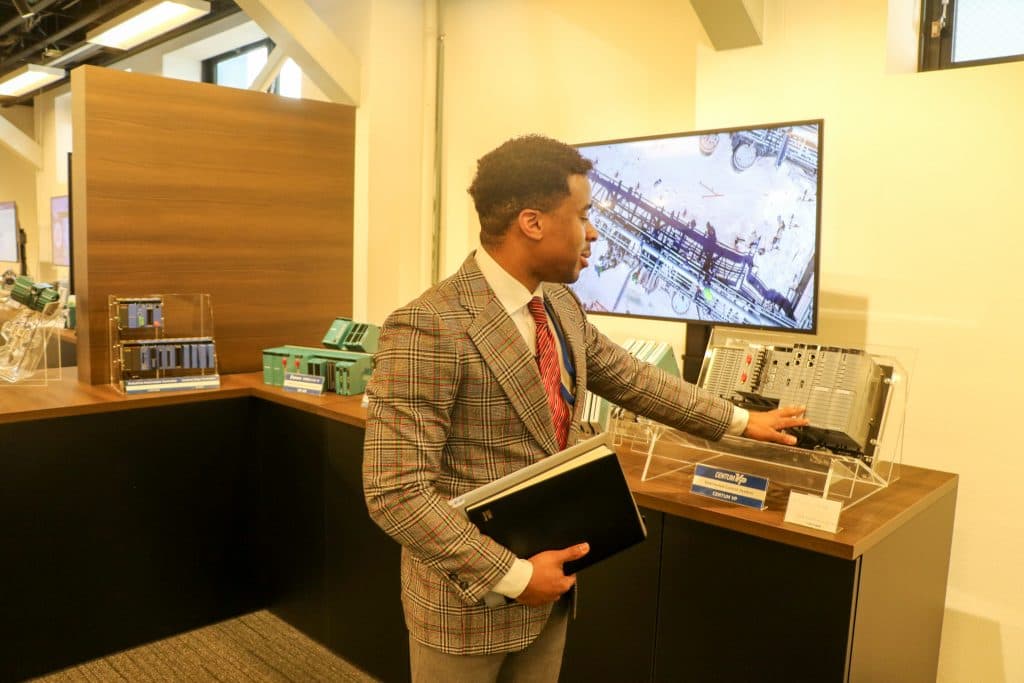
This article features two Ashinaga Africa Initiative (AAI) graduates, Petemoya from the Democratic Republic of Congo and Ezekiel from Sierra Leone, together with their employer Mr. Takeshi Hasegawa, Head of the Africa Business Promotion Center at Yokogawa Electric Corporation. It follows their journeys from early hardships to careers that connect African potential with Japanese innovation, showing how resilience, cross-cultural understanding and shared purpose drive meaningful collaboration between the two regions.
Petemoya, AAI Graduate from the Democratic Republic of Congo, University of Fukui (Class of 2024) | Currently with Yokogawa Electric Corporation.
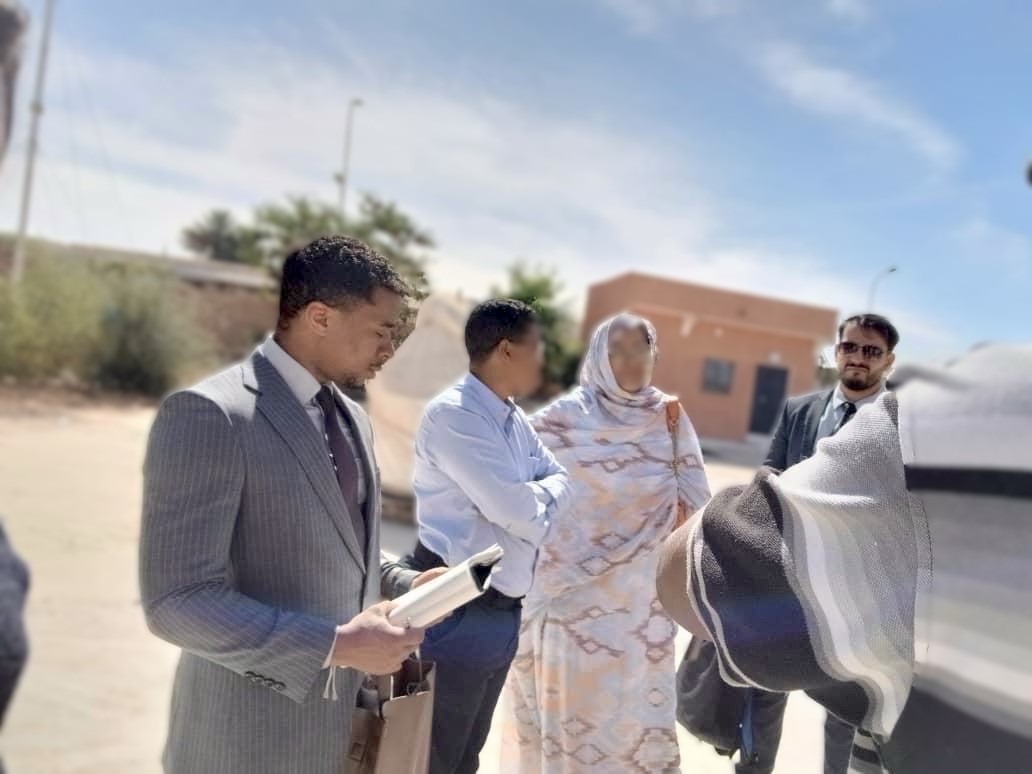
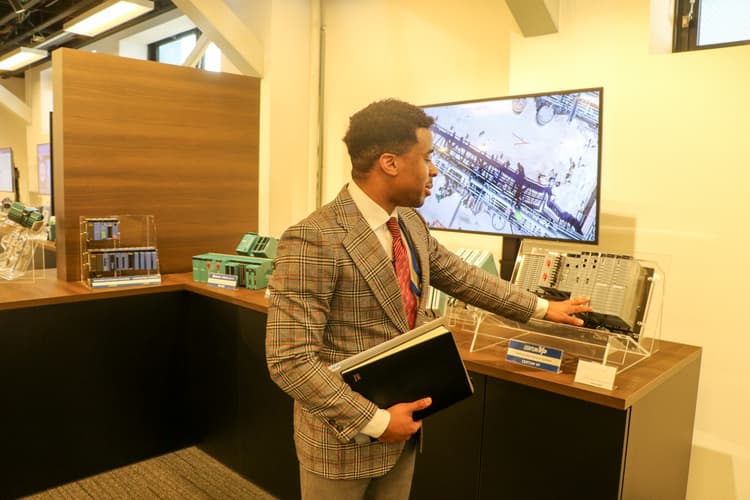
(Photo: Visit to the Department of Physics, University of Nouakchott, during a business trip to Mauritania (Petemoya on the left, 2024).
From Conflict to Opportunity, with the Support of Family
I grew up in Goma, a city in eastern Democratic Republic of the Congo, known for both natural disasters and armed conflict. Life was never easy. My father passed away when I was very young, and when I was in third grade, I also lost my mother, who had been raising six children on her own. From then on, my siblings and I supported each other as best as we could. My elder sisters, then only 16 and 17, left school to work and support my studies.
Thanks to their sacrifices, I was able to continue learning, even when civil conflict repeatedly shut down schools. Eventually, my sisters sent me to the capital, Kinshasa, so I could study in safety, despite the heavy financial burden.
The only way I could repay them was by excelling in school. I studied hard, and by the time I finished high school, I ranked among the top students in Kinshasa.
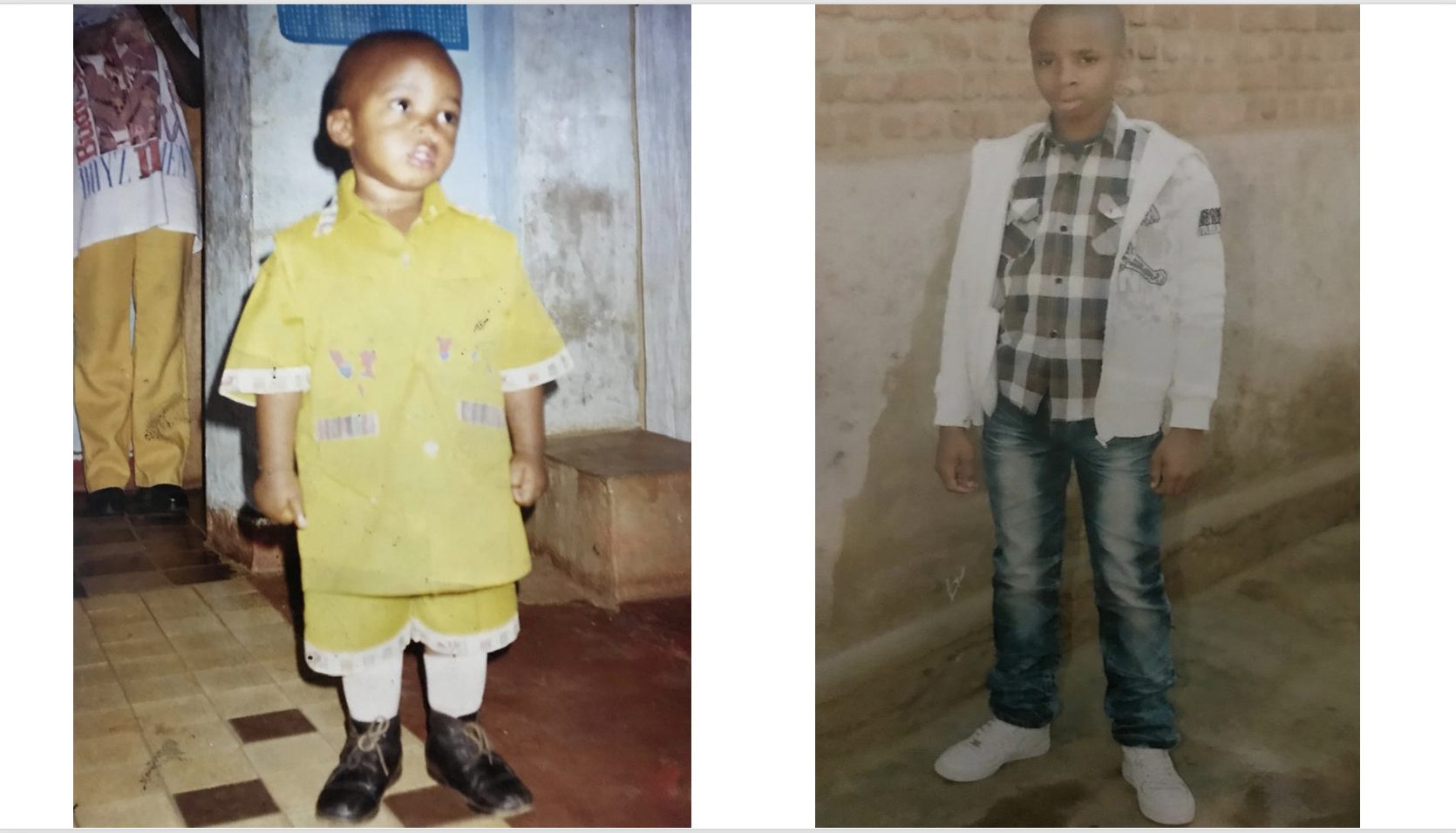
(Photo: Childhood and junior high school days — his gratitude toward family became a source of strength for growth.)
AAI: Opening a New Path
After graduating from high school, I visited the Japanese Embassy to explore scholarship opportunities. That is where I first heard about the Ashinaga Africa Initiative (AAI). It gave me hope that I might have a chance.
Japan, a country renowned for its advanced technology, was very appealing. I wanted to study in such an environment, and I decided without hesitation to apply. That decision changed my life.
As an AAI scholar, I joined a leadership camp with peers from across Africa. Living with students from diverse religious and cultural backgrounds was an eye-opening experience. It broadened my horizons, helping me not only understand my own country better but also gain a wider perspective on Africa.
Lessons from the Student Fundraising Activities in Japan
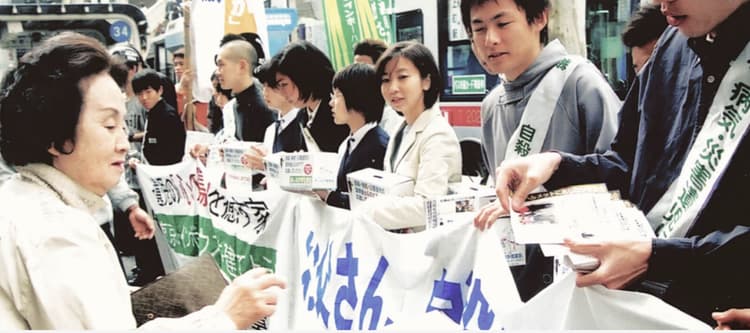
In Japan, I dedicated myself not only to academics but also to Ashinaga’s student fundraising campaigns. At first, it was intimidating to call out to or approach strangers on the street. But seeing Japanese scholarship students work so hard for others inspired me. I wanted to do the same. Eventually, I became a student leader, responsible for preparations, securing permits, and even training others.
Through this experience, I gained confidence in my teamwork, planning, public speaking, and ability to take on new challenges. I realized that creating “impact” does not always mean changing an entire country. Even making a difference in one person’s life is deeply meaningful. This lesson has guided my sense of purpose ever since.
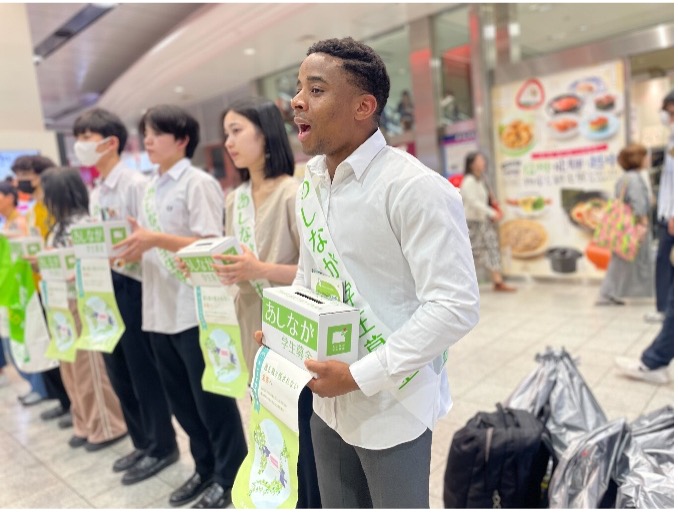
(Photo: Supporting a student fundraising event as an alumnus, expressing his wish to continue helping his juniors (Tokyo, April 2024).
Bringing Japanese Technology to African Industry
When I began searching for a job, I knew I wanted to use Japanese technology to address Africa’s challenges. That led me to Yokogawa Electric, whose work closely aligns with my mission.
Although their contributions are often behind the scenes, Yokogawa’s preventive maintenance systems are helping African factories avoid costly shutdowns. Moving from outdated methods to advanced automation will be key for Africa’s development, and I am proud to contribute to that transition.
In my first year, I was even entrusted with leading a presentation to new clients in Mauritania. By preparing thoroughly, I was able to build strong connections, an experience that not only boosted my confidence but also contributed to my professional growth.
Africa has immense potential, from natural resources to a young labor force. When I visit clients, I often hear, “Japanese products are the best.” I see my role as connecting this potential and Japan’s trusted technology.
Understanding Africa’s Diversity
One of my strengths as an African professional is recognizing that Africa cannot be treated as a single entity. Each country has its own culture and market realities. For Japanese businesses, understanding these distinctions is crucial, yet reliable information is often lacking. Having experienced this diversity firsthand, I feel well placed to help close that gap.
In the future, I hope to launch projects in Africa from the ground up, creating jobs and driving local development. I believe this is how I can give back—to my community, to Africa, and to those who have supported me along the way.
Ezekiel
AAI Graduate from Sierra Leone, Tokyo International University (Class of 2024) | Currently with Yokogawa Electric Corporation
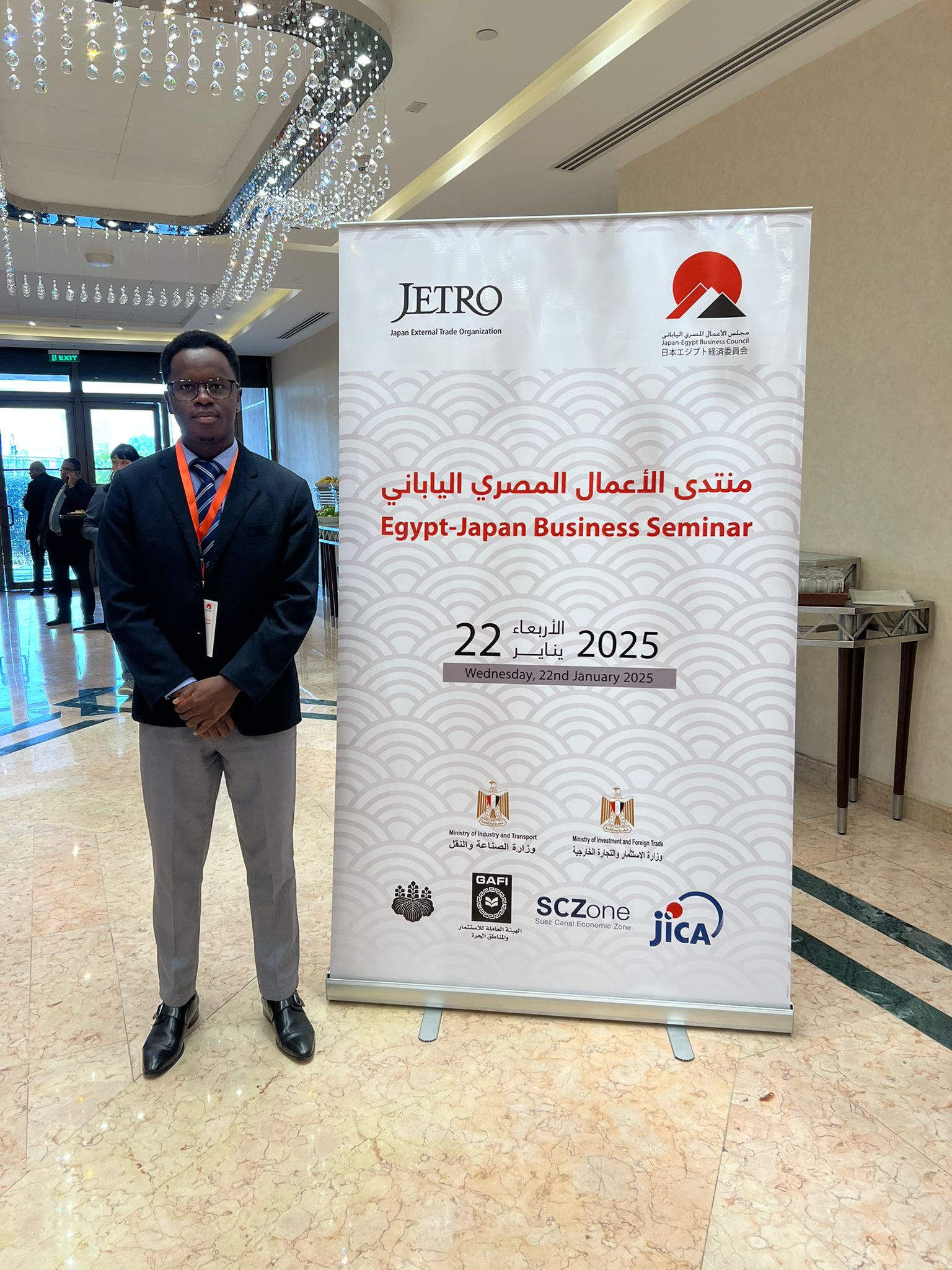
(Photo: Participating in JETRO’s “Egypt Manufacturing Mission” and gaining insights for future business expansion (Cairo, January 2025).
Pursuing Education Against All Odds
I grew up in a small village in Sierra Leone, walking nearly five kilometers each way to school. When my father passed away just as I was about to enter high school, our family’s struggles deepened. My mother had to raise six children on her own, and I was sent with my younger brother to live with a cousin in Freetown, the capital of Sierra Leone, where life remained difficult. At times, I even sold water on the street to help my family.
Even so, I never gave up on learning. I walked four kilometers every day to attend a free school run by a charity. My motivation was simple: I wanted to create a better life for my family.
After graduating at the top of my class, I worked as a volunteer teacher, earning only about $10 a month. For two years, I saved what little I could while waiting for an opportunity. Then, only three days before the deadline, I came across the AAI on Facebook and applied. That moment changed everything.
Broadening My Vision at AAI
As an AAI Scholar, I first attended the preparatory camp in Uganda. Meeting peers from across Africa made me reflect more deeply about what it means to contribute not just to my own country but to the African continent as a whole.
My interest in Japan began when I saw news coverage of the 2011 Great East Japan Earthquake. The resilience of the people and the country’s technological ability to rebuild left a lasting impression on me. Being accepted to study in Japan was a dream come true, though learning Japanese proved to be one of the greatest challenges I had ever faced.
Choosing a Path with Purpose
By my third year of university, I knew I wanted to gain professional experience in Japan after graduation. To truly contribute to Africa, I first needed to develop myself as a professional.
The job-hunting process was not easy. Often, I was the only foreign student at recruitment events, and I faced many rejections in interviews. Still, I persevered and finally received several offers. I chose Yokogawa because of its clear commitment to Africa. I wanted to work not only for myself, but for Africa.
The Contribution Only I Can Make
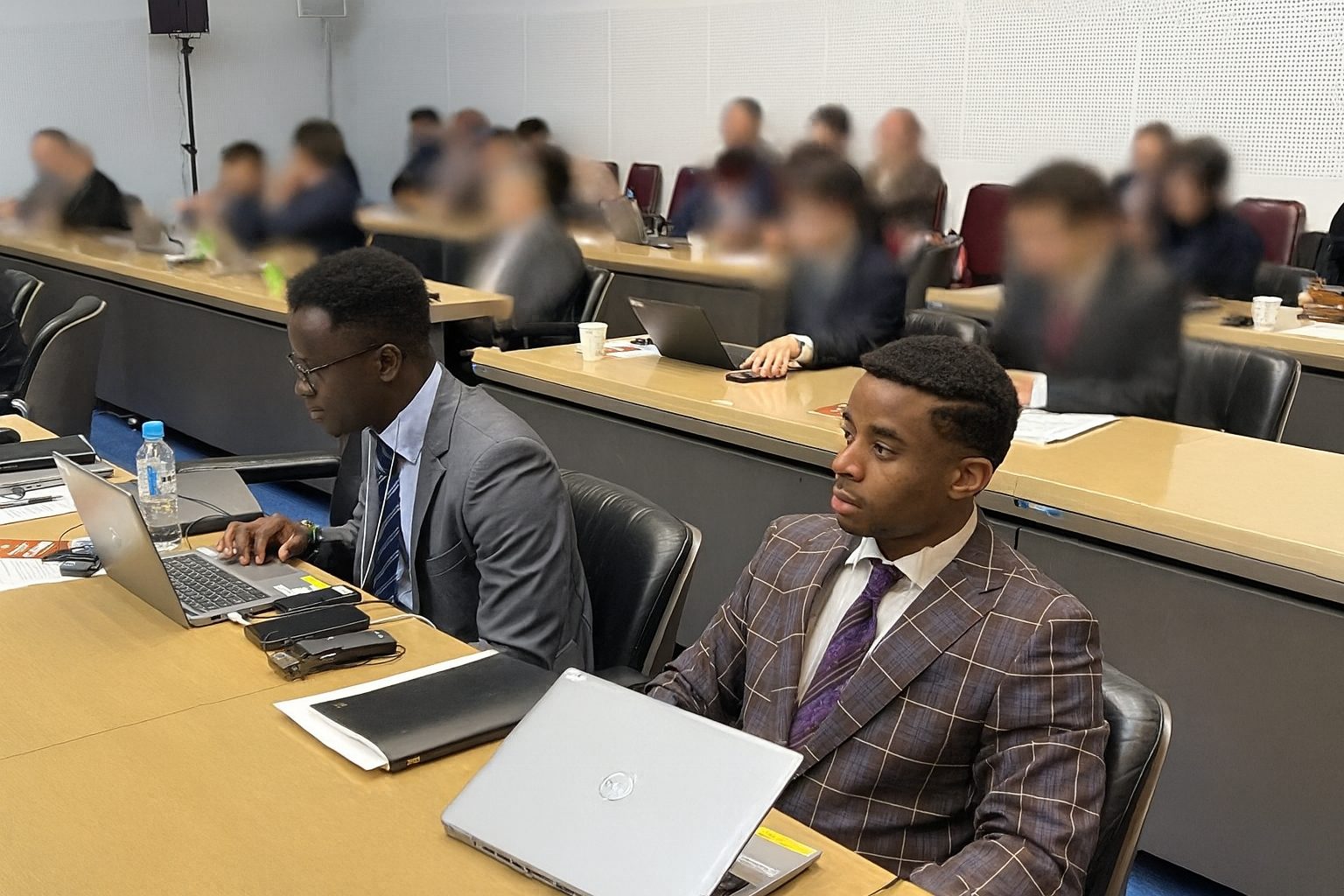
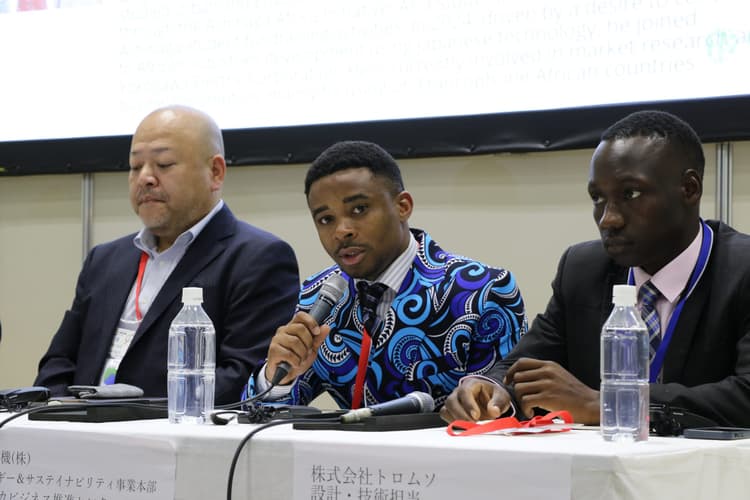
(Photo: Attending the Japan–DR Congo Business Forum, strengthening ties with government and corporate representatives from both countries (United Nations University, April 2025).
For me, challenges are a natural part of life, and I believe that with commitment, they can always be overcome. That mindset helped me adapt to Japanese corporate culture with confidence. Every day is a learning experience, as I continue to deepen my technical knowledge. Yet I feel encouraged to propose ideas and take initiative, which has helped me grow. In tasks such as embassy communications, I’ve found that my background helps me recognize subtle cultural nuances, an asset in building trust.
I also see my role as helping to broaden the understanding of Africa’s diversity and potential. Too often, Africa is reduced to narrow stereotypes of poverty or wildlife. In reality, it is a continent rich in resources, talent, and opportunity. Japan has much to gain by engaging more deeply with Africa, and African professionals like myself can help make those connections.
Looking ahead, I hope to expand my network, strengthen my expertise, and continue to grow into a role where I can contribute even more—both within Yokogawa and across Africa.
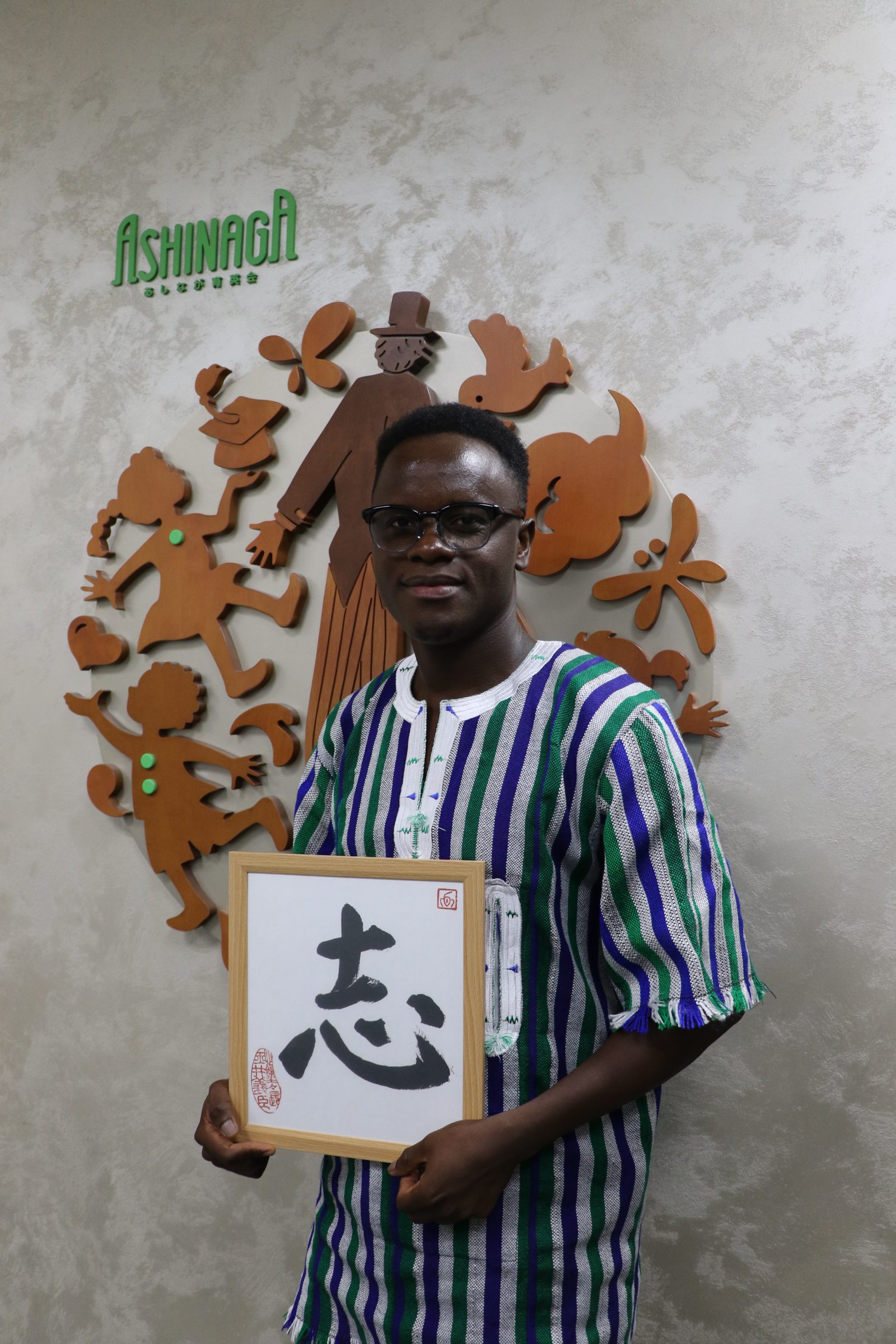
Voices from the Employer: Why AAI Graduates Are Valuable
Interview with Mr.Takeshi Hasegawa, Head of the Africa Business Promotion Center, Yokogawa Electric Corporation
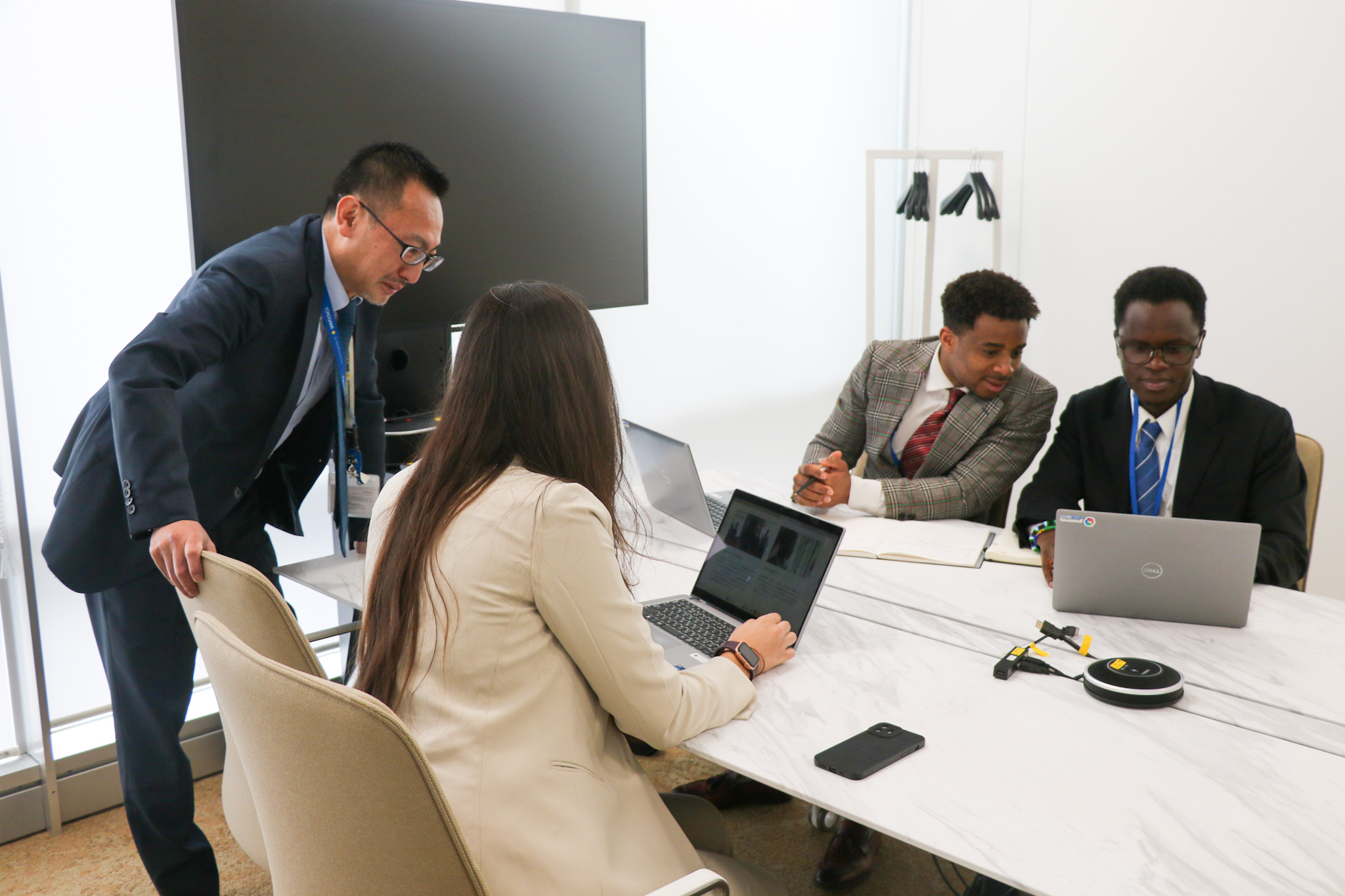
(photo: Mr. Hasegawa (left) with his team from the Africa Business Promotion Center)
Q) What led you to hire Petemoya and Ezekiel?
In April 2022, Yokogawa established the Africa Business Promotion Center at our headquarters to strengthen our engagement with the continent. To succeed in Africa, we need people who understand both Japanese and African cultures, as well as local business practices. With this in mind, we hired two AAI Graduates who had studied at Japanese universities and were fluent in Japanese.
Q) What strengths do AAI graduates bring?
First of all, their ability to communicate in Japanese is exceptional. They also have a deep understanding of Japanese culture, which makes working with them seamless. Unlike many foreign employees, we don’t have to explain every detail; they can naturally “read the air” and adapt.
Beyond language and culture, their leadership, resilience, and determination —qualities fostered by AAI and developed through overcoming hardships —stand out. They don’t wait to be told what to do. Once given a goal, they think, research, propose, and take action independently. Such initiative is very rare among fresh graduates.
I also see that the Ashinaga spirit of “paying it forward” strongly resonates with them. It aligns with our own philosophy of contributing to Africa through business, and it keeps them highly motivated.
Q) How do you view the future potential of business in Africa?
Today, the nominal GDP per capita in Sub-Saharan Africa is roughly equivalent to Japan’s in the early 1970s. With the African Continental Free Trade Area (AfCFTA) gradually removing tariffs, we expect rapid industrialization after 2026. Africa is clearly one of the world’s most important future growth regions.
At Yokogawa, we are focusing on areas such as strategic mineral development, green hydrogen and ammonia production, and regional investment. Our aim is not only to achieve short-term results but also to build a lasting presence that contributes to Africa’s industrial growth.
Developing local human resources is also essential. In the Middle East, our success was achieved through localization, investment, employment, technology transfer, and alignment with national policies. In Africa, too, we aim to foster local leaders in line with the African Union’s vision of “Africa’s development by Africans.”
Q) What kind of work are Petemoya and Ezekiel doing now?
Even in their first year, both achieved outstanding results. Petemoya conducted market research and business development in Guinea’s non-ferrous metals industry and built relationships with ministries in Mauritania. His efforts enabled real progress in French-speaking regions where our presence had previously been limited.
Ezekiel has been surveying small- and medium-sized food factories, preparing reports, and coordinating an internship program for African sales engineers at our Bahrain office. He also joined a JETRO mission to Kenya, where he identified growth opportunities in the aquaculture sector and proposed new system applications. His ability to translate information into practical outcomes is remarkable.
Q) What are your expectations for them in the future?
Currently, about 200 local staff work for us in Africa, though our regional hub remains in Bahrain. Looking ahead, we expect Africa itself will require a continent-wide headquarters. We hope that Petemoya and Ezekiel will develop into leaders capable of taking on such a role.
Currently, strategy is developed with a long-term global perspective in Japan and executed locally, focusing on short-term KPIs. In the future, if they oversee operations within Africa, this balance between local execution and global strategy will become even stronger.
They are exceptional talents, with a deep attachment to Japan and loyalty to the company, combined with invaluable local insight. We look forward to seeing them grow into future executives who will help expand Yokogawa’s business in Africa while contributing to the continent’s development.
As a center, we also remain committed to building an organization that values diversity and to creating new value by addressing Africa’s challenges together.
Recommended Tags
Related Articles
Notice of System Maintenance
Recommended Articles
Francophone students of the Ashinaga Africa Initiative now selected !
Ashinaga Senegal congratulates its first graduate
Ashinaga Senegal marks the start of their 2017/2018 activities!