Education and Support for Orphaned Students Worldwide
Education and Support for Orphaned Students Worldwide
Donate to
Support Students
Newsletter
Join our email newsletter
Stay up to date with all activities and opportunities.
We use cookies on our website to personalize and improve your experience and improve.
By continuing, you agree to the terms of our Privacy Policy.
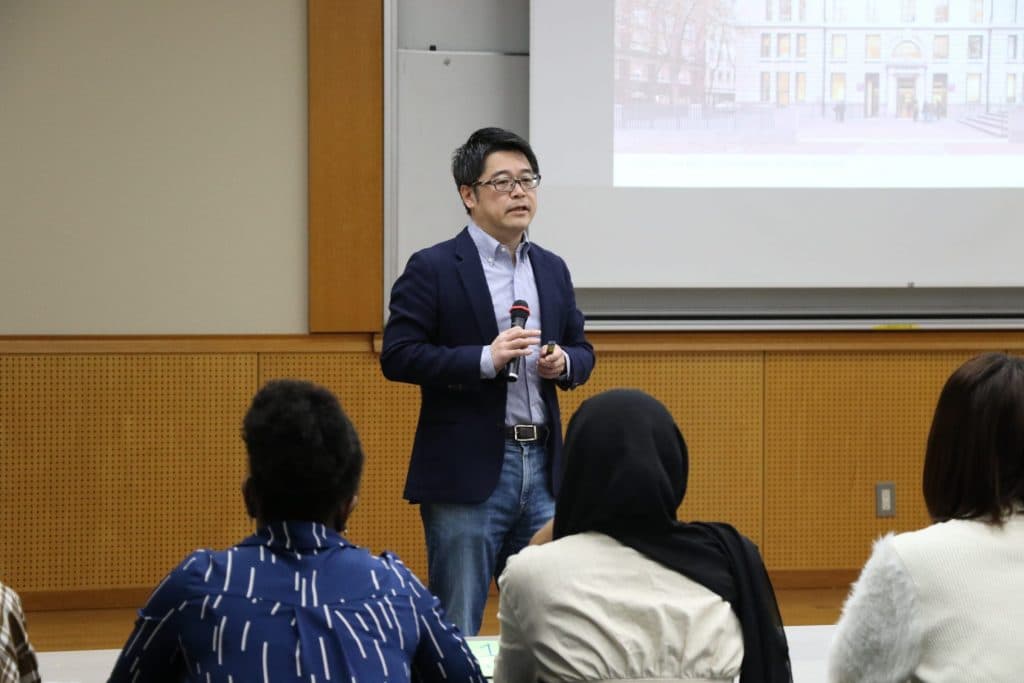
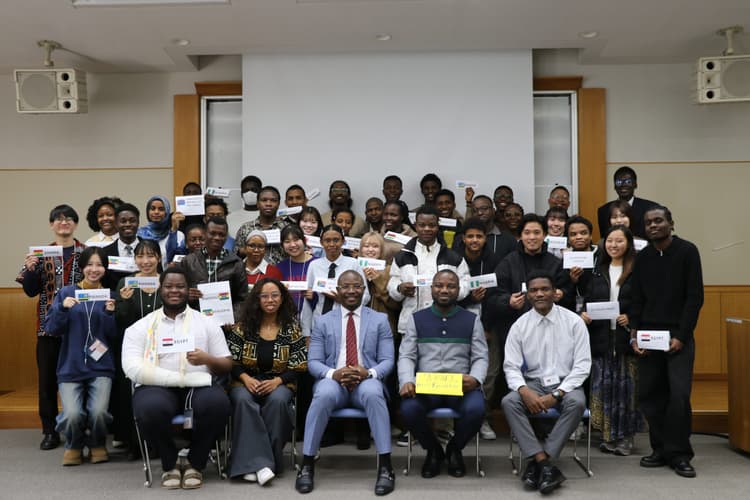
At the Ashinaga Africa Initiative (AAI) 2026 Tsudoi, held from February 20 to 24 at the National Memorial Youth Center in Tokyo, Scholars gathered under the theme “Ubuntu in Action: Building Legacies for Change.” Selected by the Scholars themselves, the theme honored the legacy of Ashinaga’s founder, Yoshiomi Tamai. Tsudoi is an annual gathering where Scholars pause to reflect not only on their academic and professional journeys, but also on the broader impact they hope to create. Rooted in the philosophy of Ubuntu, “I am because we are,” the gathering encouraged Scholars to think beyond personal success and toward collective responsibility and meaningful change.
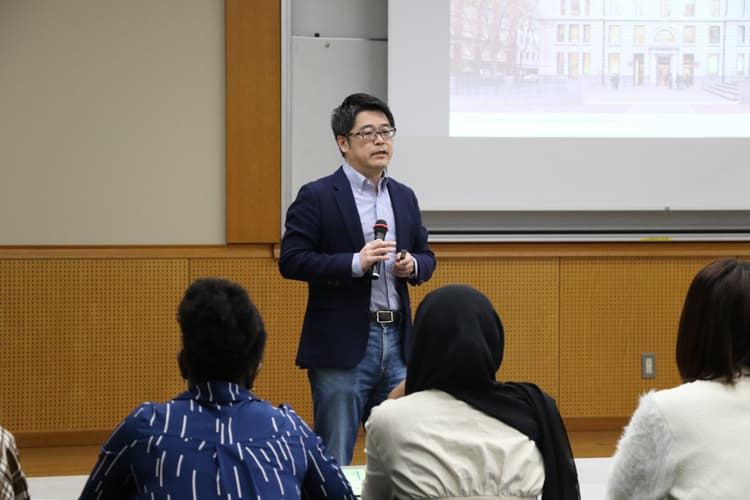
Within this context, Professor Yoshikawa, Vice President of Shizenkan University, delivered a candid and practical session on leadership in action. Originally an astrophysics student at Kyoto University, he later transitioned to economics after thoughtfully reassessing his strengths and interests, an early decision that reflected the adaptability he now encourages others.
This message resonated strongly with many Scholars. Zakaria, an AAI Scholar from Chad, reflected on how Professor Yoshikawa’s journey shaped his own perspective: “The session with Professor Yoshikawa was very inspiring for me. What touched me the most was his story about changing his dream and finding a new path in life. When he was young, he aspired to become a scientist, but through self-reflection, he realized his strengths were better suited to another path and chose to pursue it. His story made me reflect on my own journey. I once dreamed of becoming a pilot, and my high school specialization was science, but in my final year, I decided to change my path to humanities. Listening to him helped me understand that it is okay to change direction in life, because sometimes a different path can help us discover our real purpose and make a greater impact. His experience also taught me that courage, initiative, and the trust of others can help us achieve things we never imagined.”
In his first role at Recruit Holdings, a major Japanese human resources, staffing, and technology company known globally for services such as Indeed and Glassdoor, he analyzed market data in the Kansai region and developed a strategy that disrupted competitors within months. The breakthrough came from aligning his own curiosity with the company’s goals, a lesson he emphasized to Scholars: “Innovation happens at the intersection of personal interest and institutional need.”
His later work in consulting and supply chain management, including pitching to senior executives, revealed another key insight: expertise alone is not enough. Seeking to differentiate himself, he pursued advanced study to better understand how Japanese companies manage international teams. In doing so, he identified a gap between theory and practice in global management and built his career around bridging it, underscoring the importance of continuous learning and strategic self-reinvention.
The session moved beyond career advice into a broader exploration of influence. Scholars reflected on what makes a good leader, highlighting empathy, conviction, and self-discipline. Leadership, they agreed, is not defined by title. One can hold authority without positive influence and, conversely, spark change without formal power.
Using Greta Thunberg as an example, the discussion examined how movements begin. Courage, persistence, and the ability to transform a personal concern into a shared cause were identified as key. As Professor Yoshikawa noted, unless you can turn your dream into everyone’s dream, people will not follow. ‘’Significant ideas may be ridiculed at first, but without challenging norms, progress is impossible.’’
The AAI Scholars distinguished between two sources of influence: positional power, derived from formal authority, and non-positional power, built through trust, relationships, credibility, and a compelling vision. In uncertain or innovative contexts, the latter often proves more powerful. Early followers, they observed, provide legitimacy and momentum, reminding participants that leadership is inherently relational.
Ultimately, the session reinforced a clear progression: ‘’lead yourself, then lead teams, and eventually contribute to society.’’ Risk, Yoshikawa Sensei argued, cannot be calculated purely in terms of reward; it must be guided by conviction and purpose. At the same time, leadership carries responsibility; followers’ growth is shaped by the example set before them.
For AAI Scholars, the takeaway is both straightforward and timely: in a world defined by interdependence and rapid change, effective leadership requires adaptability, emotional intelligence, cultural awareness, and the courage to act on bold ideas that serve something larger than oneself. Guided by the spirit of Ubuntu, the 2026 Tsudoi affirmed that leadership is not about status, but about influence rooted in purpose and that meaningful legacies are built together.
Recommended Tags
Related Articles
Leadership and Social Impact: Lessons from the Vice President of Shizenkan University
Recommended Articles
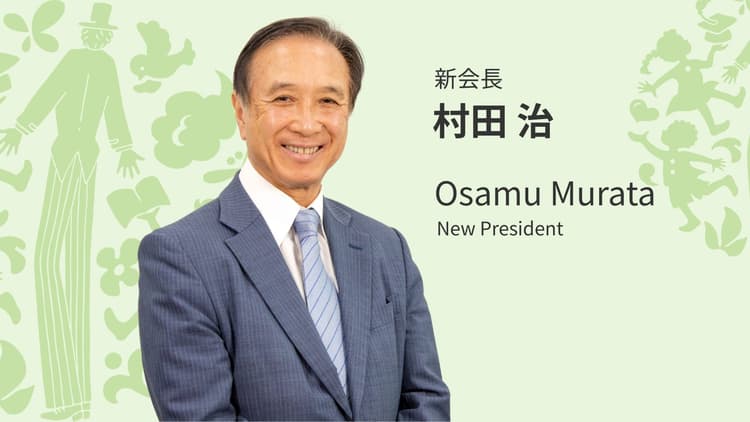
Meet Our New President, Osamu Murata
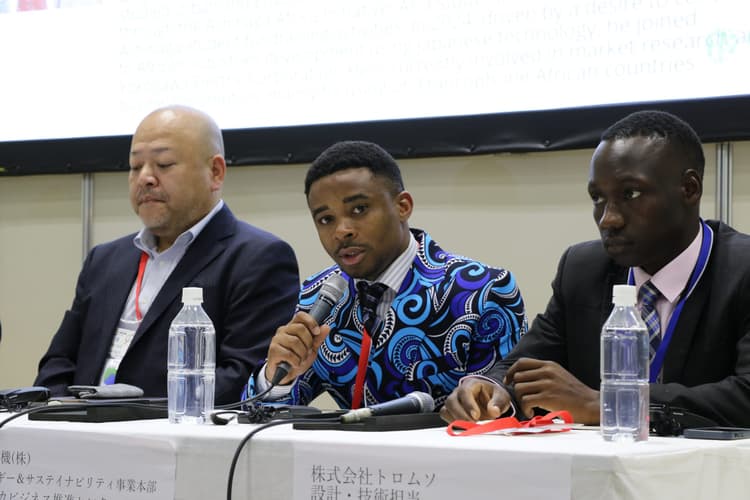
Empowering Africa’s Future Leaders: Ashinaga at TICAD 9